
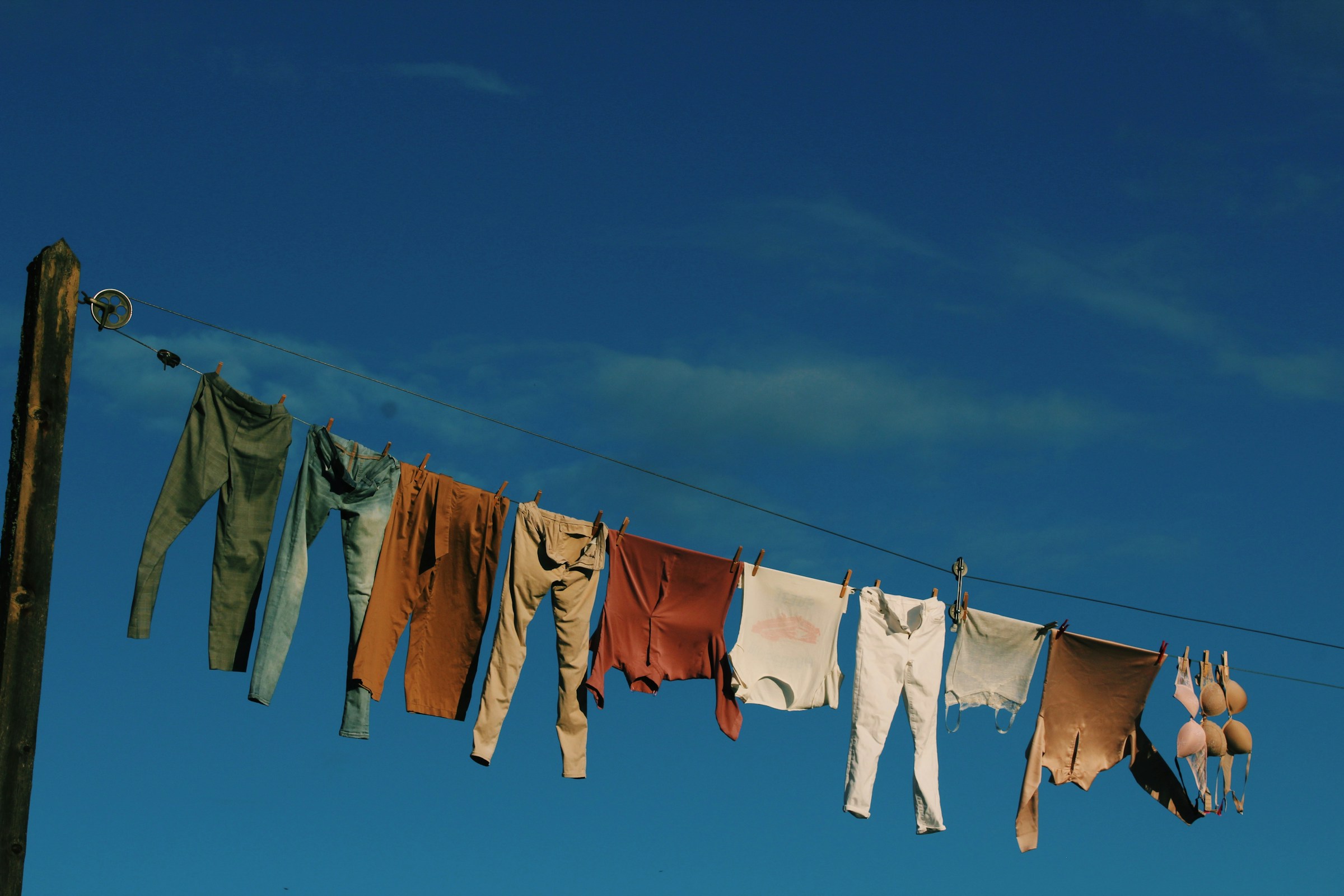
Every year in the UK, around 1.45 million tonnes of used textiles or roughly 23 items of clothing per person are discarded. When you factor in that producing just one cotton T-shirt consumes about 2,700 litres of water, the net negative environmental impact seems much worse.
Read on for how you can make your shopping habits and wardrobe shelves environment-friendlier:
- Buy less, choose better: Purchase well-made pieces that will see you through more than one ‘in trend’ season – high but very worthy investment in a timeless, sustainable wardrobe.
- Go for clothing swaps, swishes and jumble sales. They keep good-quality clothes circulating without fuelling overproduction, all while letting you refresh your wardrobe and save money.
- Leverage charity shops and second-hand/vintage stores. Reusing a garment extends its life and reduces demand for new production. Avoid donating what you wouldn’t buy yourself and purchase mostly staples second-hand.
- Repair and mend instead of discarding. Small stitches or patch-ups can add years to clothes, reduce your waste production immensely, and might even make common items cooler! Watch out for free mending workshops if you’re new to mending.
So when you’re checking out next, ask yourself: “Do I really need this? Could I reuse, borrow, buy second-hand, or mend something instead? Are there any sustainable alternatives?”.
