
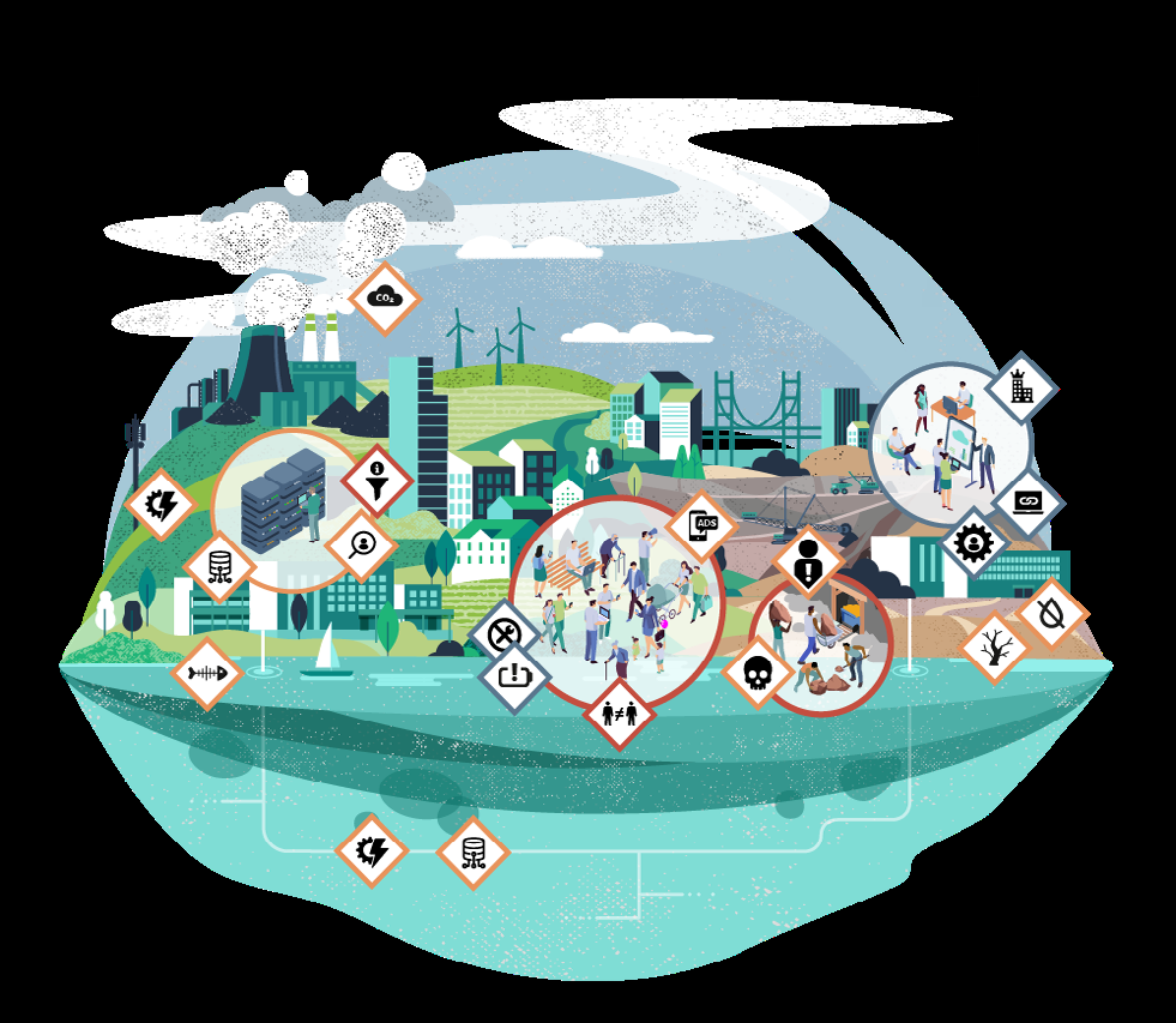
AI promises faster work and greater productivity, but every AI response relies on data centres that consume huge amounts of electricity and water.
Some data centres are the size of small towns. They can use up to 5 million gallons of water a day, enough for 50,000 people just to cool thousands of constantly running computers. Last month, one of the world’s largest data centre developments, a complex planned to be twice the size of Manhattan, was controversially approved in a Utah county, USA that has been in drought since last summer. AI is already estimated to account for around 2% of global electricity use, and demand is expected to keep rising.
The problem isn’t just the resources AI uses, it’s the lack of transparency. Most AI companies don’t publish consistent information about the energy, emissions, or water used to run their services, making it almost impossible to compare providers or hold them accountable.
What can we do?
While AI companies need to take responsibility, we can still help reduce unnecessary demand:
- Be specific and goal-oriented in your prompts. Clear instructions produce better answers and use fewer computing resources.
- Combine related questions into one prompt instead of starting multiple conversations or learn a few prompt-writing techniques. There are plenty of videos out there to guide you.
- Stop search engines using AI by default by adding “-AI” to Google or Bing searches. Or try DuckDuckGo, which lets you switch AI answers on when you choose.
- Choose AI providers with stronger environmental and ethical policies, such as Thaura and Lumo AI, ranked the top AI assistants by Ethical Consumer
- Don’t use AI for images or videos. They require orders of magnitude more processing.
Real change depends on transparency. Support campaigns calling for AI companies to report their energy use, carbon emissions, water consumption and other environmental impacts. Greater transparency makes it easier for consumers, businesses and governments to hold companies accountable.
AI can be a valuable tool, but its environmental costs shouldn’t be hidden.
SOURCES
AI.GOV.UK – Using AI Ethically and Sustainably
Coventry University – AI is Used for Efficiency but is it Sustainable